
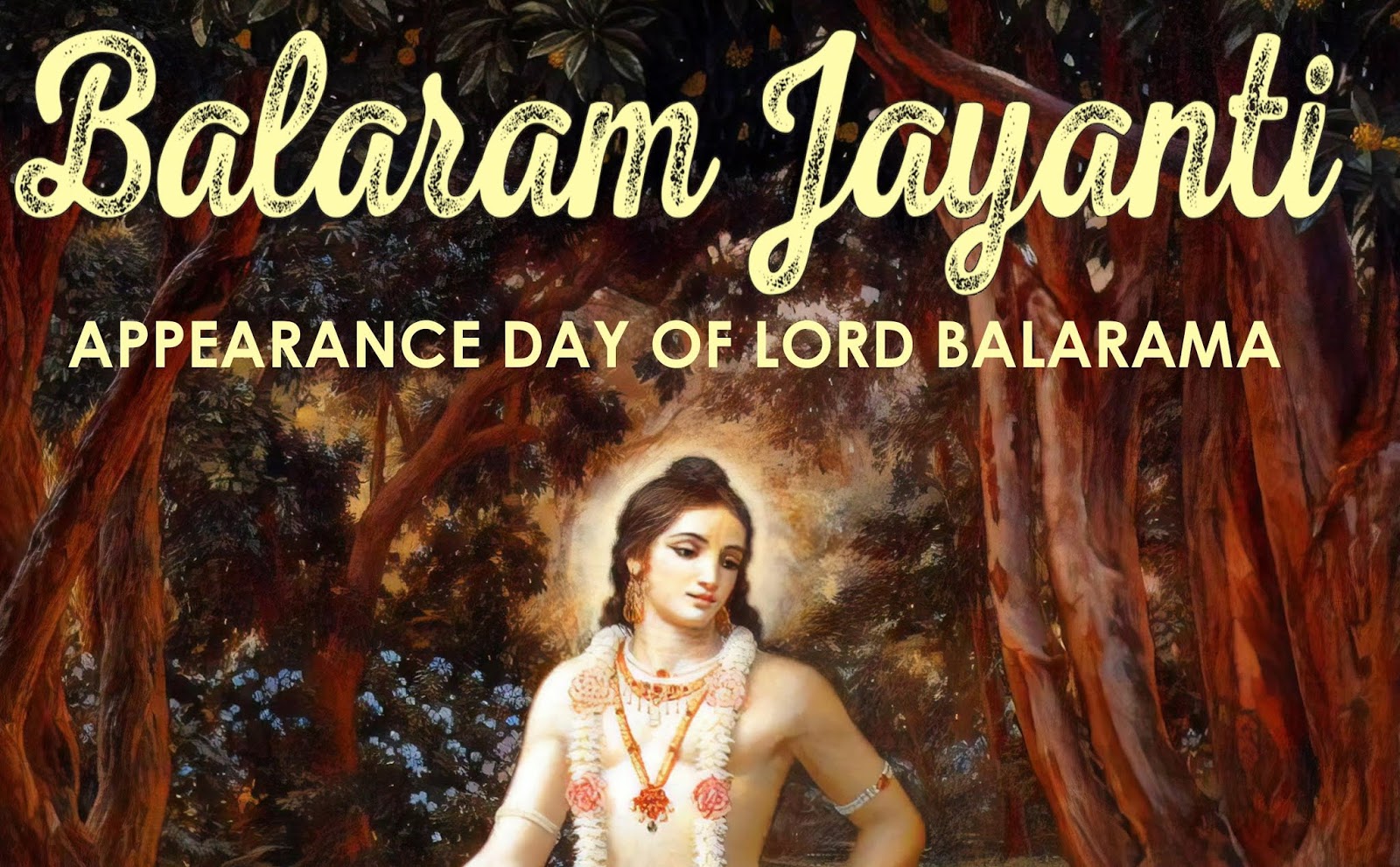
Balaram Jayanti is a significant Hindu festival that celebrates the birth of Lord Balarama, the elder brother of Lord Krishna. It usually falls on the full moon day (Purnima) of the Hindu month of Shravan (around July or August), a time intimately connected with the monsoon and agricultural cycles in India. This festival holds great religious, spiritual, and cultural importance for millions of devotees, especially in regions such as Uttar Pradesh, Gujarat, Odisha, and the Braj area.
Lord Balarama is revered as a powerful deity symbolizing strength, virtue, protection, and agricultural prosperity. He is often depicted carrying a plough, which not only signifies his association with farming and honest labor but also highlights his role as the nurturer and protector of the earth. Balarama’s connection with agriculture makes this festival especially meaningful to farming communities, who pray for good harvests and abundant fertility of the land during this auspicious time.
Mythologically, Balarama is an incarnation of Shesha Naga, the cosmic serpent on whom Lord Vishnu rests. This symbolizes his cosmic importance and the role of maintaining balance and protection in the universe. He is also celebrated in important Hindu scriptures such as the Bhagavata Purana and Mahabharata, where his strength, wisdom, and unwavering commitment to righteousness (dharma) are emphasized. While he supported his younger brother Krishna in many divine pastimes, Balarama is also known for his neutrality during the Mahabharata war, underscoring his dedication to justice and fairness.
Devotees observe Balaram Jayanti with various rituals including fasting, prayers, temple visits, singing devotional hymns, and acts of charity. The festival fosters community bonding through cultural activities like folk dances, music, and dramatizations of Balarama’s life. It serves as a reminder of the values Balarama embodies—physical and moral strength, duty, simplicity, and protection of the weak.
In summary, Balaram Jayanti is not only a celebration of the divine birth of Lord Balarama but also an occasion to honor the principles of strength, righteousness, hard work, and spiritual wisdom. It connects devotees to agricultural roots, promotes social unity, and inspires them to lead lives grounded in virtue and devotion.
Rakshabandhan and Balaram Jayanti are celebrated on the same day according to the Hindu lunar calendar, during the full moon day (Purnima) of the month of Shravana (around July-August). This is not coincidental, as there is a deep connection between the two festivals rooted in mythology and spiritual symbolism.
Rakshabandhan literally means "bond of protection," where sisters tie a thread (rakhi) on their brothers' wrists to invoke their protection and receive blessings. Since Balarama is the archetypal protective elder brother figure, the festival of Rakshabandhan is linked to his appearance day. Devotees symbolically pray to Lord Balarama to protect them from life's obstacles and vices, reflecting the same protective bond seen in the sibling relationship celebrated on Rakshabandhan.
In some regions and temples, special rituals during Balaram Jayanti also involve tying rakhis to not only human brothers but even to the horns of cattle, honoring Balarama's connection to farming and cattle. This strengthens the link between the brother-sister protective bond of Rakshabandhan and the reverence of Balarama as a guardian figure.